Is horse meat halal? The simple answer is yes, horse meat is generally considered halal in Islam if the horse is slaughtered according to Islamic guidelines. However, some scholars consider eating horse meat disliked (makruh), which causes confusion among many Muslims.
Short answer: Horse meat is halal for most Muslims.
Quick Answer:
- Horse meat = Generally Halal ✅
- Islamic slaughter = Required ✅
- Scholarly differences = Present ⚠️
- Pork contamination = Haram ❌
- Overall = Halal for most Muslims ✅
Horse meat is eaten in several countries around the world, especially in parts of Central Asia, Europe, and some Middle Eastern regions. While it is uncommon in many Muslim households, Muslims still ask whether horse meat is halal or haram according to Islamic teachings.
The confusion usually comes from cultural traditions rather than direct Islamic prohibition. Some people assume horse meat is haram simply because it is uncommon, while others confuse it with forbidden animals. In reality, horse meat has a very different ruling from pork and other clearly forbidden meats.
In this article, you will learn everything in simple English. We will explain the halal status of horse meat, scholarly opinions, slaughter requirements, processed meat concerns, nutritional facts, and what Muslims should know before consuming it.
What Does Halal Mean in Islam?
Halal means “permissible” or “allowed” in Islam.
For meat to be halal:
- The animal itself must be permissible to eat
- The animal must be slaughtered according to Islamic rules
- Allah’s name must be mentioned during slaughter
- Blood must be drained properly
- The meat must remain free from haram contamination
If these conditions are not fulfilled, the meat becomes haram.
Is Horse Meat Halal for Muslims?
Yes, horse meat is generally halal for Muslims according to the majority of Islamic scholars.
Most scholars agree that:
- Horses are permissible animals
- Their meat can be eaten if slaughtered correctly
👉 Because of this, horse meat is considered halal in Islam.
Related Post: Is Tyson Chicken Halal or Haram? Complete Muslim Guide 2026
Why Horse Meat Is Considered Halal
1. No Clear Islamic Prohibition
Islam clearly forbids certain animals such as:
- Pork
- Dead animals not slaughtered properly
- Blood
However:
- Horse meat is not directly forbidden
👉 This makes it permissible by default.
2. Historical Evidence From Early Islam
Historical Islamic narrations indicate:
- Some companions consumed horse meat
👉 This supports the majority opinion that horse meat is halal.
3. Majority Scholarly Agreement
Most Islamic schools accept horse meat as halal, including:
- Shafi’i scholars
- Hanbali scholars
- Many Hanafi scholars
👉 The majority opinion supports permissibility.
Why Some Scholars Dislike Horse Meat
Although horse meat is generally halal, some scholars classify it as:
- Makruh (disliked)
Reasons include:
- Horses were traditionally used for travel and battle
- Eating them was discouraged culturally in some regions
👉 Makruh does not mean haram.
Difference Between Halal, Makruh, and Haram
| Term | Meaning | Status |
| Halal | Permissible | ✅ Allowed |
| Makruh | Disliked | ⚠️ Better avoided |
| Haram | Forbidden | ❌ Not allowed |
👉 Horse meat may be makruh according to some scholars, but it is not considered haram by the majority.
Conditions for Horse Meat to Be Halal
Horse meat is halal only if:
- The horse is healthy
- Islamic slaughter rules are followed
- No haram ingredients are added afterward
👉 Slaughter method is extremely important.
Islamic Slaughter Requirements
Islamic slaughter requires:
- A sharp knife
- Mentioning Allah’s name
- Cutting the proper veins
- Draining blood completely
If these conditions are ignored:
👉 The meat becomes haram.
Understanding the Difference Between Culture and Religion
In some cultures:
- Eating horse meat is considered strange
In others:
- It is completely normal
👉 Cultural dislike does not make something haram in Islam.
This is one of the biggest reasons people become confused about horse meat.
Countries Where Horse Meat Is Commonly Consumed
Horse meat is commonly eaten in:
- Kazakhstan
- Mongolia
- Japan
- France
- Some Middle Eastern areas
In many Western countries:
- Horse meat is less common
👉 Availability depends on local culture.
Horse Meat vs Other Halal Meats
| Meat Type | Halal Status | Notes |
| Beef | ✅ Halal | If slaughtered properly |
| Chicken | ✅ Halal | Requires halal slaughter |
| Lamb | ✅ Halal | Common halal meat |
| Horse meat | ✅ Halal | Scholarly differences exist |
| Pork | ❌ Haram | Completely forbidden |
👉 Horse meat is closer to beef and lamb in ruling than pork.
Nutritional Information About Horse Meat
Horse meat is known for:
- High protein
- Lower fat content
- Iron and vitamin richness
| Nutrient | Horse Meat |
| Protein | High ✅ |
| Iron | High ✅ |
| Fat | Moderate ⚠️ |
| Vitamin B12 | Present ✅ |
| Calories | Moderate ⚠️ |
Some people choose horse meat because:
- It is leaner than beef
- It contains important nutrients
👉 Nutritional value does not decide halal status, but it explains why some people consume it.
Is Horse Meat Healthy?
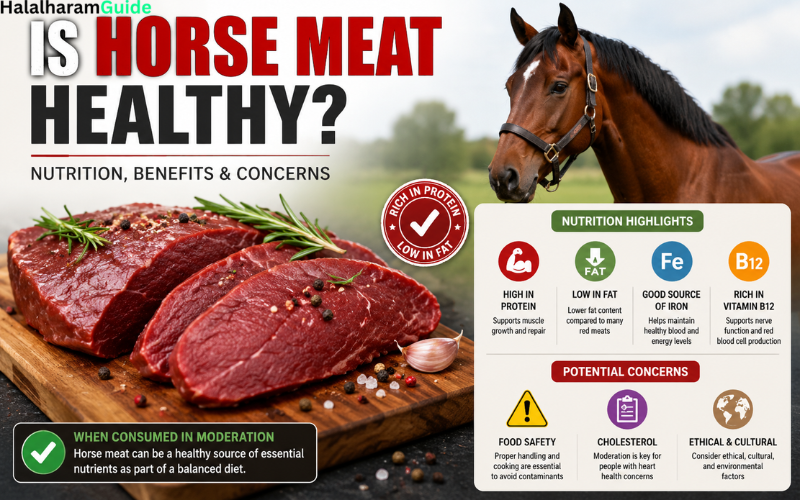
Horse meat may provide:
- Protein for muscle growth
- Iron for blood health
- Vitamins for energy support
However:
- Overconsumption of any red meat can be unhealthy
👉 Moderation is important.
Processed Horse Meat Products
Horse meat may appear in:
- Sausages
- Burgers
- Processed frozen meals
- Traditional dishes
👉 Processed foods require extra caution.
Why Processed Horse Meat Can Become Doubtful
Processed products may contain:
- Mixed meat sources
- Artificial additives
- Non-halal flavorings
- Pork contamination
👉 This can change halal status.
Processed Meat Risk Table
| Product Type | Risk Level | Reason |
| Fresh horse meat | Low ✅ | Easier to verify |
| Frozen horse meat | Medium ⚠️ | Check ingredients |
| Sausages | High ⚠️ | Mixed ingredients possible |
| Fast food products | High ⚠️ | Cross-contamination risk |
👉 Fresh halal-certified meat is the safest option.
Cross-Contamination Concerns
Cross-contamination happens when:
- Halal meat touches non-halal meat
- Shared cooking equipment is used
- Shared storage areas exist
👉 This can make halal meat doubtful.
Can Horse Meat Become Haram?
Yes, horse meat can become haram if:
- It is not slaughtered properly
- Pork ingredients are mixed in
- Alcohol-based additives are used
👉 Permissible animals still require halal preparation.
Informational Table
| Item | Halal Status | Reason |
| Fresh horse meat | ✅ Halal | Permissible animal |
| Proper Islamic slaughter | ✅ Required | Essential condition |
| Processed horse meat | ⚠️ Doubtful | Ingredients vary |
| Pork contamination | ❌ Haram | Completely forbidden |
| Halal-certified horse meat | ✅ Best option | Verified source |
Why People Get Confused About Horse Meat
People often become confused because:
- Horse meat is uncommon in many countries
- Some scholars call it makruh
- Horses are associated with riding and sports
- Cultural traditions influence opinions
👉 These factors create misunderstanding.
Real-Life Scenario: What Should You Do?
If you are offered horse meat and wondering “is horse meat halal?”, follow these steps:
- Confirm halal slaughter
- Ask about ingredients
- Avoid doubtful processed products
- Buy from trusted halal suppliers
👉 This helps ensure halal compliance.
Common Mistakes Muslims Make
- Assuming horse meat is automatically haram ❌
- Ignoring slaughter requirements ❌
- Not checking processed ingredients ❌
- Confusing cultural dislike with Islamic prohibition ❌
👉 Verification is always important.
Comparison: Horse Meat vs Pork
| Feature | Horse Meat | Pork |
| Halal status | ✅ Generally halal | ❌ Haram |
| Mentioned as forbidden | No | Yes |
| Islamic slaughter required | Yes | Not applicable |
| Muslim consumption | Allowed | Forbidden |
👉 Horse meat is completely different from pork in Islamic rulings.
Horse Meat in Restaurants
Some restaurants may serve:
- Mixed meat dishes
- Unclear meat sources
👉 Always ask:
- Is the meat halal-certified?
- Was it slaughtered Islamically?
This is especially important in non-Muslim countries.
Safe Food Choices for Muslims
If choosing horse meat:
- Buy halal-certified products
- Avoid unclear processed meats
- Verify slaughter method carefully
👉 These are safer choices.
Better Alternatives for Muslims
If you feel uncertain:
- Choose beef or lamb from halal butchers
- Buy certified halal meat products
- Avoid doubtful foods completely
👉 Avoiding doubtful matters is always safer.
Explore More Halal & Haram Food Guides.
- Is Chick-fil-A Halal or Haram? Complete Muslim Guide 2026
- Is Rennet Halal or Haram? Complete Muslim Guide 2026
- Is Kosher Halal or Haram? Complete Muslim Guide 2026
- Is Nerds Gummy Clusters halal or Haram? Complete Muslim Guide 2026
- Is Perdue Chicken Halal or Haram? Complete Muslim Guide 2026
FAQs
Is horse meat halal in Islam?
Yes, most scholars consider it halal.
Is horse meat haram?
No, it is generally not haram.
Why do some scholars dislike horse meat?
Because of historical and cultural reasons.
Does horse meat require halal slaughter?
Yes, like other halal meats.
Is horse meat healthy?
It contains protein, iron, and vitamins.
Can Muslims eat processed horse meat?
Only if ingredients are halal.
Is horse meat common in Muslim countries?
In some regions, yes.
What is the safest option?
Choose halal-certified horse meat.
Final Verdict
- Horse meat = Generally Halal ✅
- Islamic slaughter = Required ✅
- Scholarly differences = Present ⚠️
- Overall = Halal for most Muslims ✅
Related Post: Is Wayback Burgers Halal? Complete Muslim Guide 2026
Conclusion
Horse meat is generally considered halal in Islam when the horse is slaughtered according to Islamic guidelines. Most Islamic scholars allow its consumption, although some consider it makruh due to cultural or historical reasons rather than clear religious prohibition.
Muslims who choose to eat horse meat should ensure proper halal slaughter and avoid processed products with doubtful ingredients. By checking certification, understanding preparation methods, and following halal principles carefully, Muslims can make informed food choices that align with Islamic teachings and dietary guidelines.