Is seafood halal? The simple answer is yes, most seafood is halal, but some types are considered doubtful depending on Islamic views. This means Muslims can generally eat seafood, but should be careful about certain items.
Short answer: Most seafood is halal, but some are doubtful.
Quick Answer:
- Fish = Halal ✅
- Shellfish = Halal / Doubtful ⚠️
- Overall = Mostly Halal ✅
Seafood is widely eaten around the world and includes fish, shrimp, crab, lobster, and many other sea creatures. Many Muslims feel confused about whether all seafood is halal or if some types should be avoided. The confusion usually comes from different Islamic opinions and interpretations.
Another reason for confusion is that seafood is often considered a “safe option” in non-halal restaurants. While this is sometimes true, it is not always guaranteed. The way seafood is cooked, handled, and served can affect its halal status. So, it is important to understand not just the type of seafood, but the full process behind it.
In this article, you will learn everything in simple English. We will explain the seafood halal status, types of seafood, different views in Islam, processing issues, cooking concerns, and what Muslims should do in real-life situations. This guide is fully informational and helps you make better halal choices.
What Does Halal Mean in Islam?
Halal means “permissible” or “allowed” in Islam.
For food to be halal:
- It must be pure and clean
- It must not contain haram ingredients
- It must not harm the body
- It must be prepared in a permissible way
Islam encourages eating food that is beneficial and avoids anything harmful or doubtful.
If something contains forbidden elements, it becomes haram (not allowed).
Is Seafood Halal for Muslims?
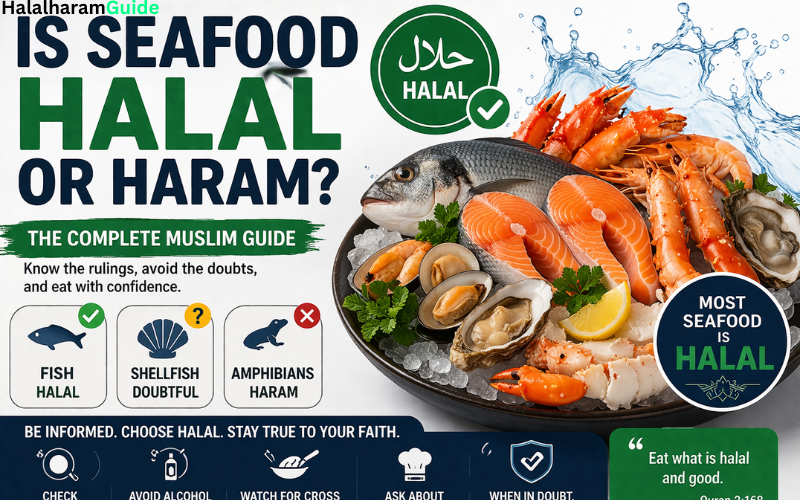
Yes, most seafood is halal for Muslims.
Seafood includes:
- Fish
- Shrimp
- Crab
- Lobster
- Other sea animals
👉 In general, seafood is considered halal, especially fish.
Related Posts: Is Wingstop Halal or Haram? Complete Muslim Guide 2026
Why Seafood Is Considered Halal
1. Comes from Water
Seafood lives in water, and water animals are generally allowed.
👉 This makes seafood different from land animals.
2. Does Not Require Halal Slaughter
Fish and many sea animals:
- Do not require slaughter
- Are naturally halal
👉 This makes them easy and convenient for Muslims.
3. Simple and Natural Food
Seafood is:
- Natural
- Widely consumed
- Nutritionally beneficial
👉 This supports its halal status.
Types of Seafood and Their Halal Status
1. Fish
Examples:
- Salmon
- Tuna
- Cod
👉 ✅ Halal (All scholars agree)
2. Shrimp and Prawns
👉 ⚠️ Halal (Most scholars allow, some consider doubtful)
3. Crab and Lobster
👉 ⚠️ Halal / Doubtful (Depends on interpretation)
4. Shellfish (Clams, Oysters, Mussels)
👉 ⚠️ Doubtful (Different opinions)
5. Amphibious Creatures
Examples:
- Frogs
- Crocodiles
👉 ❌ Haram (Not allowed)
Seafood Processing and Packaging Concerns
Another important point to understand is that not all seafood is processed in the same way. In modern food industries, seafood is often cleaned, frozen, preserved, and packaged before reaching consumers. During this process, additional ingredients may be added.
For example:
- Frozen seafood may include preservatives
- Breaded fish may contain additives
- Pre-marinated seafood may include sauces
Some of these ingredients may:
- Contain alcohol-based flavoring ❌
- Include non-halal additives ❌
- Be unclear in origin ⚠️
👉 This means even halal seafood can become doubtful after processing.
Different Islamic Views on Seafood
1. Majority Opinion
Most scholars say:
- All seafood is halal
👉 This includes fish and shellfish.
2. Hanafi Opinion
Hanafi scholars say:
- Only fish is halal
- Other seafood is doubtful or not allowed
👉 This is why some Muslims avoid shrimp, crab, or lobster.
Ingredient and Cooking Considerations
Even if seafood is halal:
- Cooking method matters
- Ingredients matter
Watch out for:
- Alcohol-based sauces ❌
- Non-halal flavoring ❌
- Cross-contact ❌
👉 Always check preparation.
Cross-Contamination in Restaurants
Another key factor many people ignore is cross-contamination in restaurants and food chains. Seafood may be cooked in the same oil or on the same grill as non-halal meat, such as pork or non-halal chicken.
Examples:
- Fried fish cooked in shared oil
- Seafood grilled with non-halal meat
- Same utensils used for all foods
👉 This can make the food doubtful or unsafe.
Real-Life Scenario: What Should You Do?
If you are at a restaurant and wondering, “is seafood halal?”, here is what to do:
- ✅ Choose simple fish dishes
- ⚠️ Ask about ingredients
- ❌ Avoid complex sauces
- ❌ Avoid shared cooking areas
👉 Always confirm before eating.
Common Mistakes Muslims Make
Many Muslims make these mistakes:
- Thinking all seafood is always halal ❌
- Ignoring cooking methods ❌
- Not checking ingredients ❌
- Following assumptions ❌
👉 Always stay informed.
Are There Any Doubtful Seafood Items?
Yes, some seafood items are doubtful:
- Shellfish
- Amphibious animals
- Processed seafood
👉 These should be avoided if you follow stricter opinions.
Informational Table
Here is a quick summary if you don’t want to read the full article:
| Seafood Type | Halal Status | Reason |
| Fish | ✅ Halal | Fully allowed |
| Shrimp | ⚠️ Halal/Doubtful | Different opinions |
| Crab/Lobster | ⚠️ Doubtful | Scholarly differences |
| Shellfish | ⚠️ Doubtful | Not universally accepted |
| Amphibians | ❌ Haram | Not allowed |
Why People Get Confused About Seafood
People get confused because:
- Different Islamic opinions
- Cultural differences
- Restaurant practices
- Lack of awareness
👉 Always rely on knowledge, not assumptions.
Seafood in Different Countries
Seafood practices vary globally:
- Some countries use simple cooking
- Others use complex sauces
- Ingredients may differ
👉 Always check locally.
Cultural and Cooking Differences
It is also important to understand that seafood habits vary across cultures and regions. In some places, seafood is very simple, such as grilled fish with basic spices, which is usually halal and safe.
However, in other regions:
- Seafood is cooked with wine
- Sauces contain unclear ingredients
- Complex recipes are used
👉 This makes some dishes doubtful.
Health Benefits of Seafood
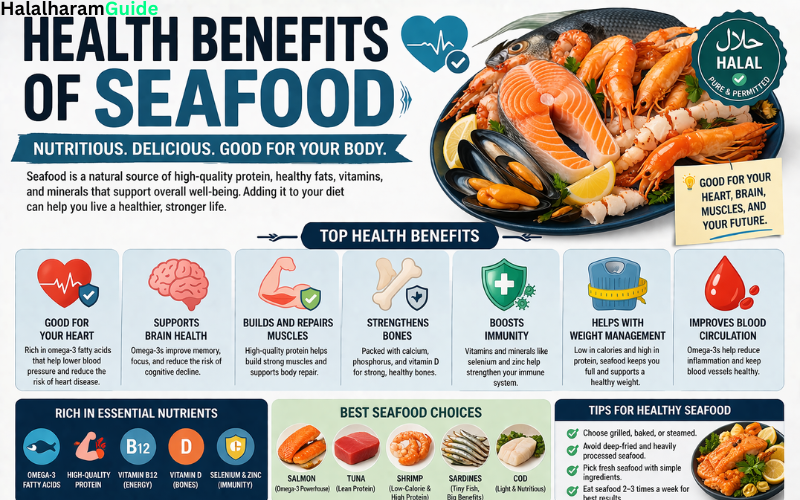
Seafood is:
- High in protein
- Good for heart health
- Rich in vitamins
👉 It is a healthy halal option when prepared correctly.
Better Choices for Muslims
Best halal seafood options:
- Fresh fish
- Grilled seafood
- Home-cooked meals
👉 Avoid processed and doubtful items.
FAQs
Is seafood halal for Muslims?
Yes, most seafood is halal.
Is shrimp halal?
Yes for most scholars, but doubtful for some.
Is crab halal?
It depends on Islamic opinion.
Is all fish halal?
Yes, all fish are halal.
Are shellfish halal?
They are considered doubtful.
Can Muslims eat seafood in restaurants?
Yes, but check ingredients and cooking methods.
What seafood should be avoided?
Amphibians and doubtful items.
Is seafood always safe?
Only if prepared without haram ingredients.
Final Verdict
- Seafood = Mostly Halal ✅
- Fish = Halal ✅
- Some items = Doubtful ⚠️
Related Posts: Is Beer Halal or Haram? Complete Muslim Guide 2026
Conclusion
Seafood is generally halal in Islam, especially fish, which is accepted by all scholars. However, some types like shellfish, crab, and lobster are considered doubtful by certain Islamic schools, particularly in the Hanafi view.
It is also important to remember that halal is not just about the type of food but also about how it is prepared, processed, and served. Even halal seafood can become doubtful if it is cooked with non-halal ingredients or in shared environments.
For Muslims who want to follow halal strictly, it is best to stick to simple fish options, avoid doubtful seafood items, and always check ingredients and preparation methods. Making informed choices helps maintain a halal lifestyle and ensures peace of mind.