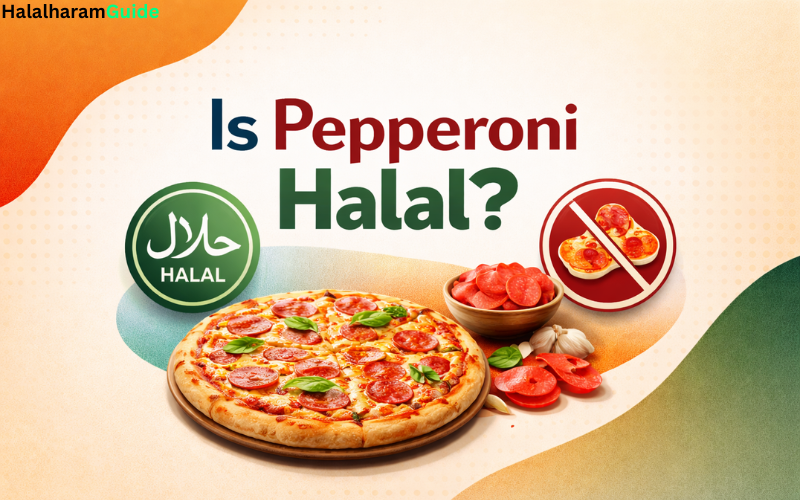
Is pepperoni halal? The simple answer is no, pepperoni is generally not halal because it is usually made from pork or non-halal beef. This means Muslims should avoid eating regular pepperoni unless it is clearly halal-certified.
Pepperoni is not halal in most cases.
Quick Answer:
- Pepperoni = Haram ❌
- Reason = Pork or non-halal meat
- Overall = Not Halal ❌
Pepperoni is a popular topping used in pizzas, sandwiches, and snacks. Many people love its spicy taste and soft texture. However, Muslims often feel confused about whether pepperoni is halal, especially when it is labeled as beef pepperoni. The main issue is not just the type of meat but also how it is sourced and processed.
In this article, you will learn everything in simple English. We will explain the pepperoni halal status, ingredients, types, and what Muslims should do in real situations. This guide is based on available research, and you should always check labels and certifications before eating.
What Does Halal Mean in Islam?
Halal means “permissible” or “allowed” in Islam.
For food to be halal:
- The animal must be slaughtered in the name of Allah
- The slaughter must follow Islamic (Zabiha) rules
- The food must not contain pork or pork products
- The food must not contain alcohol
Allah has clearly forbidden pork and commanded Muslims to eat what is halal and pure (Quran 2:173).
If these rules are not followed, the food becomes haram (not allowed).
Islam also teaches Muslims to avoid doubtful food.
Is Pepperoni Halal for Muslims?
No, pepperoni is not halal for Muslims in most cases.
Pepperoni is usually made from:
- Pork ❌
- Beef (non-halal) ❌
- Mixed meat ❌
Because of this, regular pepperoni is considered haram.
Related Posts: Is Starburst Halal or Haram? Complete Muslim Guide 2026
Why Pepperoni Is Not Halal
1. Made from Pork
Traditional pepperoni is made from pork.
Pork is completely haram in Islam.
2. Non-Halal Beef
Some pepperoni is made from beef, but:
- The beef is not halal-certified
- It is not slaughtered according to Islamic rules
This also makes it haram.
3. Mixed Meat Sources
Many brands use a mix of:
- Pork
- Beef
This increases the risk of haram ingredients.
4. Processing Methods
Pepperoni is a processed meat:
- It goes through curing and fermentation
- It may include additives
The process may involve non-halal elements.
5. No Halal Certification
Most pepperoni products are not halal-certified.
Without certification, Muslims cannot trust the product.
Ingredient and Processing Analysis
Typical pepperoni ingredients include:
- Meat (pork or beef) ❌
- Salt
- Spices
- Preservatives
- Flavor enhancers
The main issue is the meat source and processing method.
Real-Life Scenario: What Should You Do?
If you are ordering pizza and asking, “is pepperoni halal?”, here is what to do:
- ❌ Avoid regular pepperoni
- ✅ Ask for halal-certified pepperoni
- ⚠️ Choose vegetable or cheese options
- ⚠️ Confirm with the restaurant
Always check before eating.
Common Mistakes Muslims Make
Many Muslims make these mistakes:
- Thinking beef pepperoni is always halal ❌
- Not checking certification ❌
- Ignoring ingredients ❌
Always verify before eating.
Are There Any Halal Pepperoni Options?
Yes, some halal options exist:
- Halal-certified beef pepperoni
- Turkey pepperoni (halal-certified)
- Chicken pepperoni (halal-certified)
These are only halal if certified.
Important Warning
Even halal-looking pepperoni can be:
- Non-halal
- Mixed with pork
- Cross-contaminated
Always check labels carefully.
Informational Table
Here is a quick summary if you don’t want to read the full article:
| Item Type | Halal Status | Reason |
| Pork pepperoni | ❌ Haram | Pork is forbidden |
| Beef pepperoni | ❌ Haram | Not halal-certified |
| Mixed pepperoni | ❌ Haram | Contains pork |
| Halal-certified version | ✅ Halal | Proper slaughter |
| Turkey/Chicken (halal) | ✅ Halal | If certified |
| Unknown source | ⚠️ Doubtful | No clear info |
Islamic Guidance on Doubtful Food
Islam teaches:
- Halal is clear
- Haram is clear
- Doubtful things should be avoided
The Prophet (peace be upon him) advised Muslims to avoid doubtful matters.
If you are unsure, it is better to avoid pepperoni.
Why People Get Confused About Pepperoni
People get confused because:
- Some labels say “beef pepperoni”
- It looks similar to halal meat
- It is widely available
But remember:
- Beef ≠ Halal
- Label ≠ Certification
Always check properly.
Is Pepperoni Halal in Different Countries?
In most countries:
- USA: Not halal
- UK: Mostly not halal
- Europe: Not halal
Only halal-certified brands are safe.
Better Alternatives for Muslims
Instead of regular pepperoni, you can choose:
- Halal-certified pepperoni
- Chicken or turkey halal slices
- Vegetable toppings
Always look for halal labels.
You can also read our guide on halal fast food restaurants.
Check: Is Domino’s halal or haram?
FAQs
Is pepperoni halal for Muslims?
No, regular pepperoni is not halal.
Is beef pepperoni halal?
Not unless it is halal-certified.
Can Muslims eat pepperoni pizza?
Only if the pepperoni is halal-certified.
Does pepperoni contain pork?
Yes, most traditional pepperoni contains pork.
Is turkey pepperoni halal?
Only if it is halal-certified.
Can I eat pepperoni if I am unsure?
No, it is better to avoid doubtful food.
Why is pepperoni haram?
Because it contains pork or non-halal meat.
What should Muslims eat instead?
Halal-certified meat or vegetarian options.
Final Verdict
- Pepperoni = Haram ❌
- Reason = Pork or non-halal meat
- Overall = Not Halal ❌
Related Posts: Is Wagamama Halal or Haram? Complete Muslim Guide 2026
Conclusion
Pepperoni is generally not halal because it is made from pork or non-halal meat sources. Even when it is labeled as beef or turkey, it is not considered halal unless it is clearly halal-certified and prepared according to Islamic guidelines.
For Muslims who want to follow halal properly, it is always better to avoid regular pepperoni and choose halal-certified alternatives. Islam encourages avoiding doubtful food, so checking labels and certifications is the safest and best decision for maintaining halal dietary rules.