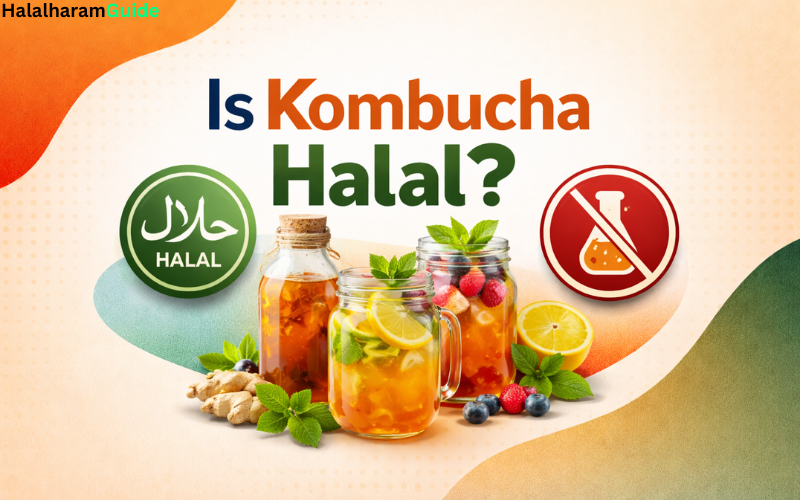
Is kombucha halal? The simple answer is that kombucha is generally considered doubtful because it contains small amounts of naturally occurring alcohol due to fermentation. While some scholars permit it if the alcohol content is very low and non-intoxicating, others advise Muslims to avoid it for safety.
Short answer: Kombucha is usually considered doubtful (makruh or questionable), but halal-certified versions may be permissible.
Quick Answer:
- Kombucha = Doubtful ⚠️
- Reason = Naturally occurring alcohol from fermentation
- Halal-Certified Kombucha = Halal ✅
- Overall = Avoid unless certified ⚠️
Kombucha is a fermented tea drink that has gained global popularity due to its potential health benefits, including improved digestion and probiotics. Many Muslims are curious about its halal status because fermentation naturally produces alcohol, even though the drink is marketed as “non-alcoholic.”
In this article, you will learn everything in simple English. We will explain what kombucha is, how it is made, why scholars differ in their opinions, and how Muslims can make safe and informed choices.
What Does Halal Mean in Islam?
Halal means “permissible” or “allowed” in Islam.
For any food or drink to be halal:
- It must not contain pork or pork-derived ingredients.
- It must not contain intoxicating substances.
- Any animal-derived ingredients must come from halal-slaughtered animals.
- The product must be clean and safe for consumption.
If any of these conditions are violated, the item becomes haram (not allowed).
Is Kombucha Halal for Muslims?
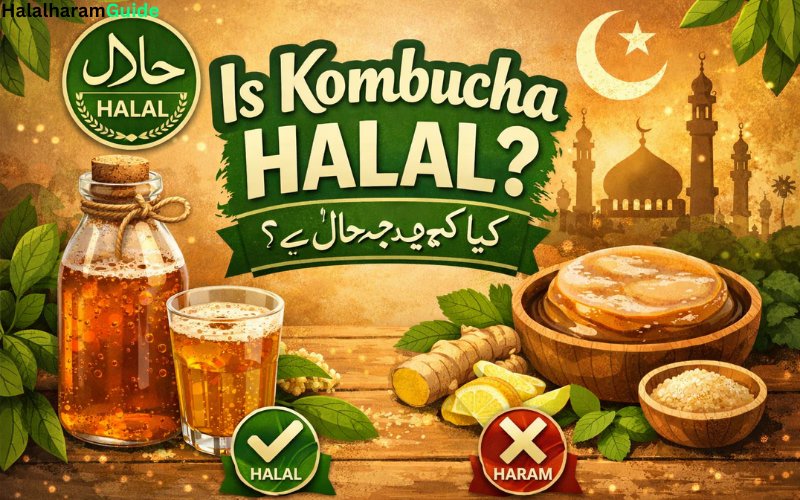
Kombucha is generally considered doubtful rather than clearly halal or haram.
This is because:
- It is produced through fermentation.
- Fermentation naturally creates small amounts of alcohol.
- The alcohol content is usually below 0.5%, similar to many non-alcoholic beverages.
👉 Therefore, kombucha may be permissible if the alcohol content is minimal and non-intoxicating, especially when it is halal-certified.
Related Posts: Is Sour Patch Halal or Haram? Complete Muslim Guide 2026
What Is Kombucha?
Kombucha is a fermented beverage made from:
- Tea (black or green)
- Sugar
- SCOBY (Symbiotic Culture of Bacteria and Yeast)
- Water
During fermentation, yeast converts sugar into alcohol, and bacteria then convert much of that alcohol into organic acids. This process gives kombucha its slightly fizzy and tangy taste.
How Kombucha Is Made
Step-by-Step Process
- Brewing Tea: Black or green tea is prepared.
- Adding Sugar: Sugar is added to feed the yeast.
- Introducing SCOBY: The SCOBY initiates fermentation.
- Fermentation: Yeast produces alcohol, and bacteria convert it into acids.
- Bottling: The drink is bottled and sometimes flavored.
👉 Even though much of the alcohol is converted, trace amounts usually remain, leading to scholarly debate about its halal status.
Why Kombucha Is Considered Doubtful
1. Presence of Alcohol
- Fermentation naturally produces alcohol.
- Even though the amount is small, it raises concerns in Islamic dietary laws.
👉 This is the primary reason kombucha is considered doubtful.
2. Variation in Alcohol Levels
- Commercial kombucha typically contains less than 0.5% alcohol.
- Homemade kombucha may contain higher levels if fermentation is extended.
👉 This variability increases uncertainty.
3. Scholarly Differences of Opinion
Islamic scholars have differing views:
- Permissible View: If the alcohol content is minimal and non-intoxicating, it may be considered halal.
- Cautious View: Any beverage produced through fermentation should be avoided to prevent doubt.
👉 Because of these differing opinions, kombucha is often classified as makruh (discouraged) or doubtful.
4. Lack of Halal Certification
Most kombucha brands do not carry halal certification, making it difficult for consumers to verify compliance with halal standards.
Types of Kombucha and Their Halal Status
| Type of Kombucha | Alcohol Content | Halal Status | Notes |
| Commercial Kombucha | <0.5% | ⚠️ Doubtful | Generally permissible to some scholars |
| Halal-Certified Kombucha | <0.5% | ✅ Halal | Safest option |
| Homemade Kombucha | Variable | ⚠️ Doubtful | Alcohol levels may increase |
| Hard Kombucha | >0.5% | ❌ Haram | Intoxicating |
Is Kombucha Halal in Different Countries?
United States & Europe
- Most kombucha contains less than 0.5% alcohol.
- Generally considered non-alcoholic by regulatory standards.
- Usually not halal-certified.
United Kingdom
- Similar standards to the U.S.
- Some brands may offer certification.
Middle East & Muslim Countries
- Halal-certified kombucha options are more common.
- Regulations are stricter regarding alcohol content.
The halal status of kombucha may vary depending on certification and local regulations.
Health Benefits of Kombucha
Many people consume kombucha for its potential health benefits, including:
- Probiotics: Supports gut health.
- Antioxidants: Helps fight oxidative stress.
- Digestive Support: May improve digestion.
- Immune System Support: Promotes overall wellness.
- Detoxification: Assists the body in eliminating toxins.
👉 While these benefits are appealing, they do not override halal considerations.
Real-Life Scenario: What Should You Do?
If you are wondering, “is kombucha halal?”, follow these steps:
- ✅ Check the alcohol content on the label.
- ✅ Look for halal certification.
- ✅ Avoid homemade versions unless verified.
- ❌ Avoid hard kombucha, which contains significant alcohol.
- ⚠️ Consult a knowledgeable scholar if unsure.
Common Mistakes Muslims Make
Many Muslims misunderstand kombucha due to:
- Assuming all “non-alcoholic” drinks are halal ❌
- Ignoring the fermentation process ❌
- Consuming homemade kombucha without verification ❌
- Not checking halal certification ❌
👉 Always verify before consuming.
Are There Halal Alternatives to Kombucha?
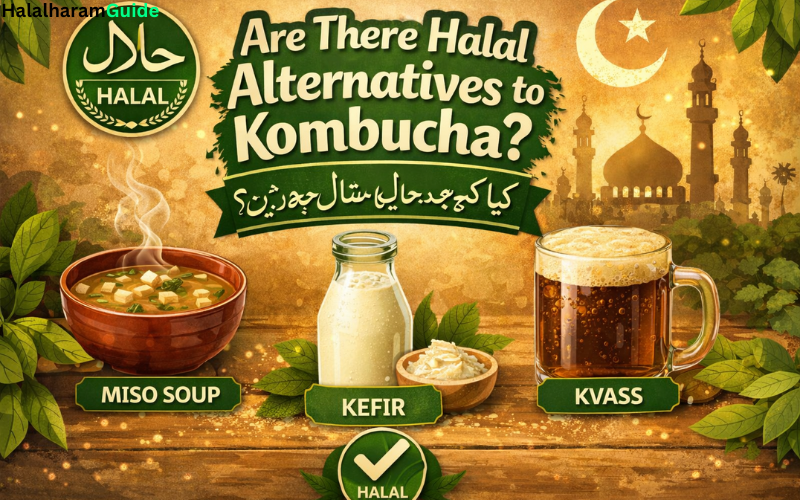
Yes, Muslims can enjoy several halal alternatives that provide similar health benefits:
- Probiotic yogurt drinks
- Kefir made with halal-certified ingredients
- Herbal teas
- Sparkling water with natural flavors
- Fermented drinks with halal certification
These options offer health benefits without the concern of alcohol content.
Informational Table
| Item | Halal Status | Reason |
| Regular Kombucha | ⚠️ Doubtful | Trace alcohol from fermentation |
| Halal-Certified Kombucha | ✅ Halal | Verified compliance |
| Homemade Kombucha | ⚠️ Doubtful | Alcohol levels may vary |
| Hard Kombucha | ❌ Haram | Intoxicating alcohol content |
| Herbal Tea | ✅ Halal | No fermentation |
Why People Get Confused About Kombucha
Confusion arises because:
- It is labeled as “non-alcoholic.”
- Alcohol content is very low.
- It is marketed as a health drink.
- Scholarly opinions differ.
- Lack of halal certification.
👉 Understanding these factors helps Muslims make informed decisions.
Explore More Halal & Haram Food Guides.
- Is Sour Patch Halal or Haram? Complete Muslim Guide 2026
- Are Jolly Ranchers Halal or Haram? Complete Muslim Guide 2026
- Is Shrimp Halal or Haram? Complete Muslim Guide 2026
- Is Seafood Halal or Haram? Complete Muslim Guide 2026
- Is Wingstop Halal or Haram? Complete Muslim Guide 2026
FAQs
Is kombucha halal for Muslims?
Kombucha is generally considered doubtful due to trace alcohol but may be permissible if halal-certified.
Does kombucha contain alcohol?
Yes, small amounts of alcohol are naturally produced during fermentation.
Is non-alcoholic kombucha halal?
It may be permissible if the alcohol content is minimal and the product is halal-certified.
Can Muslims drink homemade kombucha?
Homemade kombucha is doubtful because alcohol levels can vary and may exceed permissible limits.
What is hard kombucha?
Hard kombucha contains higher alcohol levels and is considered haram.
Are there halal-certified kombucha brands?
Yes, some brands offer halal-certified options, especially in Muslim-majority countries.
Do the health benefits make kombucha halal?
No, health benefits do not override halal dietary rules.
What is the safest option for Muslims?
Choosing halal-certified kombucha or avoiding it altogether is the safest approach.
Final Verdict
- Kombucha = Doubtful ⚠️
- Reason = Trace alcohol from fermentation
- Halal-Certified Version = Halal ✅
- Hard Kombucha = Haram ❌
- Overall = Avoid unless certified ⚠️
Related Posts: Are Jolly Ranchers Halal or Haram? Complete Muslim Guide 2026
Conclusion
Kombucha is a popular fermented tea known for its potential health benefits, but its halal status remains doubtful due to the presence of naturally occurring alcohol. While some scholars permit its consumption when the alcohol content is minimal and non-intoxicating, others recommend avoiding it to stay on the safe side.
For Muslims seeking certainty, the best approach is to choose halal-certified kombucha or opt for alternative probiotic drinks. By staying informed and cautious, you can make dietary choices that align with Islamic principles while maintaining a healthy lifestyle.